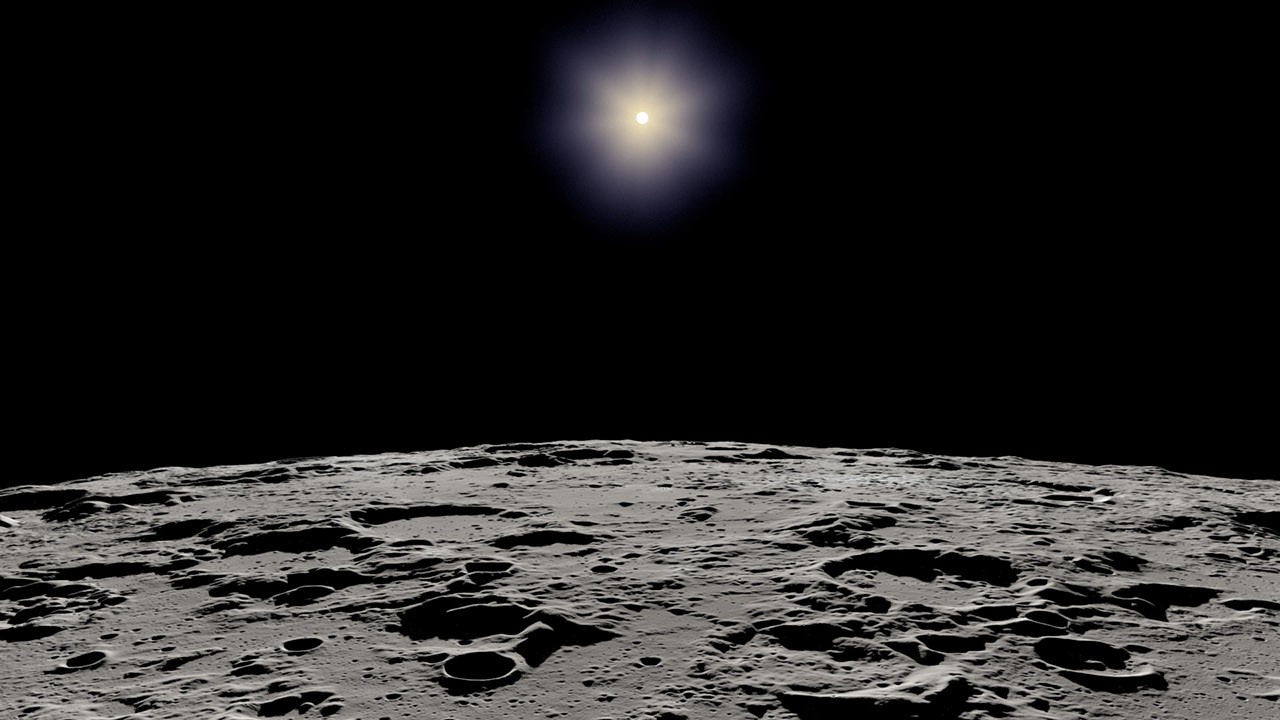
The moon, a luminous pearl in the night sky, has captivated humanity for millennia. Its ethereal glow inspires poets, guides sailors, and illuminates our darkest nights. But despite its apparent brilliance, the question of what makes the moon shine holds a fascinating scientific answer that often surprises many: the moon is not a source of light itself.
Instead, every photon of moonlight reaching Earth is a testament to cosmic reflection. The moon acts as a magnificent, albeit imperfect, celestial mirror, bouncing sunlight back across the vast expanse of space. Understanding this phenomenon involves delving into lunar albedo, the mesmerizing dance of lunar phases, and even the subtle yet significant role of Earth’s own atmosphere. Let’s unravel the science behind the moon’s captivating glow.
The Moon, Our Celestial Mirror: How Sunlight Becomes Moonlight
At its core, the science of moonlight is fundamentally about reflection. The sun, our solar system’s powerful star, emits an incredible amount of light and heat. These solar rays travel through the vacuum of space, eventually striking the surface of the moon. At any given moment, precisely half of the moon is bathed in direct sunlight, experiencing its own "day" side.
When these photons of sunlight collide with the lunar surface, a portion of them are scattered and reflected. It is this reflected light that then journeys millions of miles back towards Earth, making the moon visible to our eyes. Without the sun’s constant illumination, the moon would remain an invisible, dark object against the blackness of space. This fundamental principle underscores the fact that the moon does not possess any internal mechanism for light production; it is simply a passive reflector. For a deeper dive into this foundational concept, you can explore Does the Moon Shine? The Science of Reflected Sunlight.
The Constant Dance of Illumination
It's a common misconception that only the portion of the moon we see illuminated is actually receiving sunlight. In reality, the sun always illuminates half of the moon. The reason we perceive different amounts of illumination is purely dependent on our vantage point from Earth as the moon orbits us. Think of it like this: if you hold a ball under a lamp, one half is always lit. What changes is how much of that lit half you can see from where you are standing.
Albedo and the Lunar Surface: The Paradox of a Dark Glow
One of the most intriguing aspects of how the moon shines is the actual reflectivity of its surface. The term for this reflectivity is albedo, which measures the fraction of incident sunlight an object reflects. Surprisingly, the moon's average albedo is quite low, typically ranging from a mere 7% to 12%. This means that for every 100 units of sunlight hitting the moon, only 7 to 12 units are bounced back.
Why is the moon’s albedo so low? The lunar surface is predominantly composed of dark gray volcanic rock and a fine layer of pulverized rock and dust known as regolith. This material is remarkably similar in color and texture to fresh asphalt on Earth. Compared to objects with high albedo, like fresh snow (which can reflect up to 90% of sunlight), the moon is a relatively poor reflector. This leads to a fascinating paradox: despite being a dark, rocky body, the moon appears strikingly bright in our night sky. This perceived brightness is largely due to two factors:
- The Sheer Intensity of Sunlight: Even reflecting a small percentage of the sun's immense output results in a significant amount of light.
- Proximity to Earth: The moon is our closest celestial neighbor, meaning that even a small amount of reflected light appears bright because it hasn't diffused over vast cosmic distances.
Furthermore, the moon's surface texture, riddled with countless craters, mountains, and valleys, plays a role. Unlike a smooth, mirrored surface that would reflect light in a single, predictable direction, the uneven lunar terrain causes sunlight to scatter in myriad directions. This diffuse scattering ensures that some reflected light always reaches Earth, regardless of the sun's exact angle.
The Moon's Many Faces: Understanding Lunar Phases
While the moon is constantly reflecting sunlight, its apparent shape and brightness visibly change throughout the month. This captivating cycle of transformation is what we know as lunar phases. These phases are a direct consequence of the moon's orbit around Earth and the varying angles at which we observe the sunlit portion of its surface.
The moon takes approximately 29.5 days to complete one full orbit around Earth, a period known as a synodic month. As it progresses through this orbit, our perspective changes, allowing us to see different amounts of its illuminated hemisphere. Let’s quickly outline the key phases:
- New Moon: The moon is positioned between the Earth and the sun. The side facing Earth receives no direct sunlight, making it appear dark and virtually invisible.
- Waxing Crescent: A sliver of the sunlit side becomes visible, growing larger each night. "Waxing" means increasing.
- First Quarter: We see exactly half of the moon illuminated. It looks like a "D" shape in the Northern Hemisphere.
- Waxing Gibbous: More than half of the moon is illuminated, continuing to grow in size.
- Full Moon: The Earth is positioned between the sun and the moon, allowing us to see the entire side of the moon facing us fully illuminated. This is often when the moon appears brightest.
- Waning Gibbous: The illuminated portion begins to shrink after the full moon. "Waning" means decreasing.
- Third Quarter: Again, half of the moon is lit, but it’s the opposite half from the First Quarter (looks like a backward "D").
- Waning Crescent: Only a thin sliver of the moon remains visible, shrinking until it disappears into the New Moon phase once more.
It's crucial to remember that throughout all these phases, the sun always illuminates half of the moon; only our view of that illumination changes.
Earth's Veil: How Our Atmosphere & Orbit Influence Lunar Brightness
Beyond the fundamental principles of reflection and phases, several subtle yet significant factors influence how we perceive the moon’s glow from Earth, including our own planet’s atmosphere and the moon’s orbital dynamics.
The Atmospheric Filter
Earth's atmosphere acts as a giant filter, impacting the moon's apparent brightness and even its color. Particles in our atmosphere—like dust, water vapor, and pollutants—can scatter or absorb moonlight. When the moon is low on the horizon, for instance, its light must travel through a greater thickness of atmosphere. This increased atmospheric path scatters away shorter wavelengths of light (like blue and green), allowing longer wavelengths (red and orange) to pass through more easily. This is why the moon often appears reddish or orange when it's just rising or setting.
This atmospheric filtering becomes dramatically apparent during a total lunar eclipse. During such an event, Earth passes directly between the sun and moon, casting a shadow that prevents direct sunlight from reaching the lunar surface. However, the moon doesn't vanish entirely. Instead, it often takes on a stunning coppery or blood-red hue. This occurs because some sunlight still manages to reach the moon, but only after being refracted and scattered by Earth’s atmosphere. Our atmosphere bends and filters the sunlight, allowing primarily red and orange wavelengths to penetrate Earth’s shadow and illuminate the moon, which then reflects this reddish light back to us. To learn more about this captivating phenomenon, check out Why The Moon Looks Red: Explaining Lunar Eclipse Hues.
Orbital Eccentricity and "Supermoons"
The moon’s orbit around Earth is not a perfect circle; it’s slightly elliptical. This means there are times when the moon is closer to Earth (perigee) and times when it is farther away (apogee). When a full moon coincides with perigee, we experience what is popularly known as a "Supermoon." During a Supermoon, the moon appears noticeably larger and up to 30% brighter than an apogee full moon, simply because it's closer to us, allowing more reflected light to reach our eyes.
Conversely, when the moon is at its apogee, it appears slightly smaller and dimmer. These variations, though often subtle to the casual observer, contribute to the dynamic experience of lunar observation.
Conclusion: A Reflected Symphony of Light
So, what makes the moon shine? The simple yet profound answer is reflected sunlight. Far from being a self-luminous beacon, our moon is a cosmic mirror, silently redirecting photons from our star across the solar system and to our eyes. Its apparent brilliance is a complex interplay of its surprisingly dark, volcanic surface (low albedo), the sheer intensity of the sun’s light, its proximity to Earth, and the ever-changing angles of its orbit around our planet that dictate its mesmerizing phases.
Furthermore, Earth's own atmosphere adds layers of complexity, filtering and coloring the moonlight, creating spectacular phenomena like the reddish glow of a lunar eclipse. The next time you gaze up at the moon, remember the incredible journey of light it represents – a silent symphony of reflection, celestial mechanics, and atmospheric dance that transforms a dark, rocky body into the glowing orb we cherish in our night sky.